Building a digital learning culture across the RSPCA’s workforce
Liz Sheeran has played a pivotal role in shaping learning at the RSPCA, supporting its evolution from basic IT training to a digitally enabled learning programme supporting 1,800 staff and volunteers across England and Wales. This reflective case study explores that transformation and the impact of CLC membership along the way.
The RSPCA is the world’s oldest animal welfare charity and has been a member of the Charity Learning Consortium since 2009. Over the years, the approach to learning has evolved from basic IT training into a more established digital learning offering.
The organisation now supports around 1,800 staff and volunteers across England and Wales, working across a wide network of services, including four hospitals, one clinic, three wildlife centres and 14 animal centres.
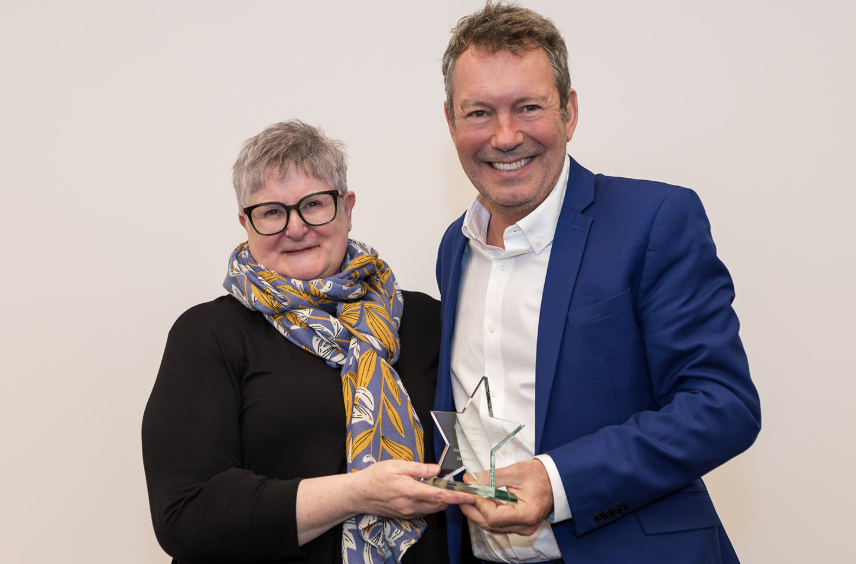
For over 15 years, Liz Sheeran, Digital Learning Advisor, has played a key role in shaping and developing learning across the organisation. She was recognised for her outstanding dedication to her work and the organisation at the Charity Learning Awards 2025.
The Challenge
The RSPCA’s digital learning journey began during a Microsoft Office 2007 upgrade.
At the time, training was delivered by just two IT trainers. Classroom-based delivery for the entire organisation was impractical, costly, and difficult to scale.
The challenge was made even more complex because:
- Many staff had no email address
- Frontline workers often lacked access to computers
- Shared devices and shared logins were common
- Inspectorate officers sometimes travelled over an hour simply to access a computer
Traditional learning delivery methods were no longer sustainable and the organisation needed a scalable digital solution.
Phase One: Launching Digital Learning
In 2009, the RSPCA partnered with CLC to launch its first learning management system, e-learn.
Initially, the platform focused almost entirely on IT training, particularly Microsoft Office skills. Internal courses created by IT trainers supplemented the catalogue.
Early adoption was modest but promising:
- 126 active users
- 13 available courses
- 65 hours of completed learning
At the time, this represented a significant step forward.
Phase Two: Moving to Moodle
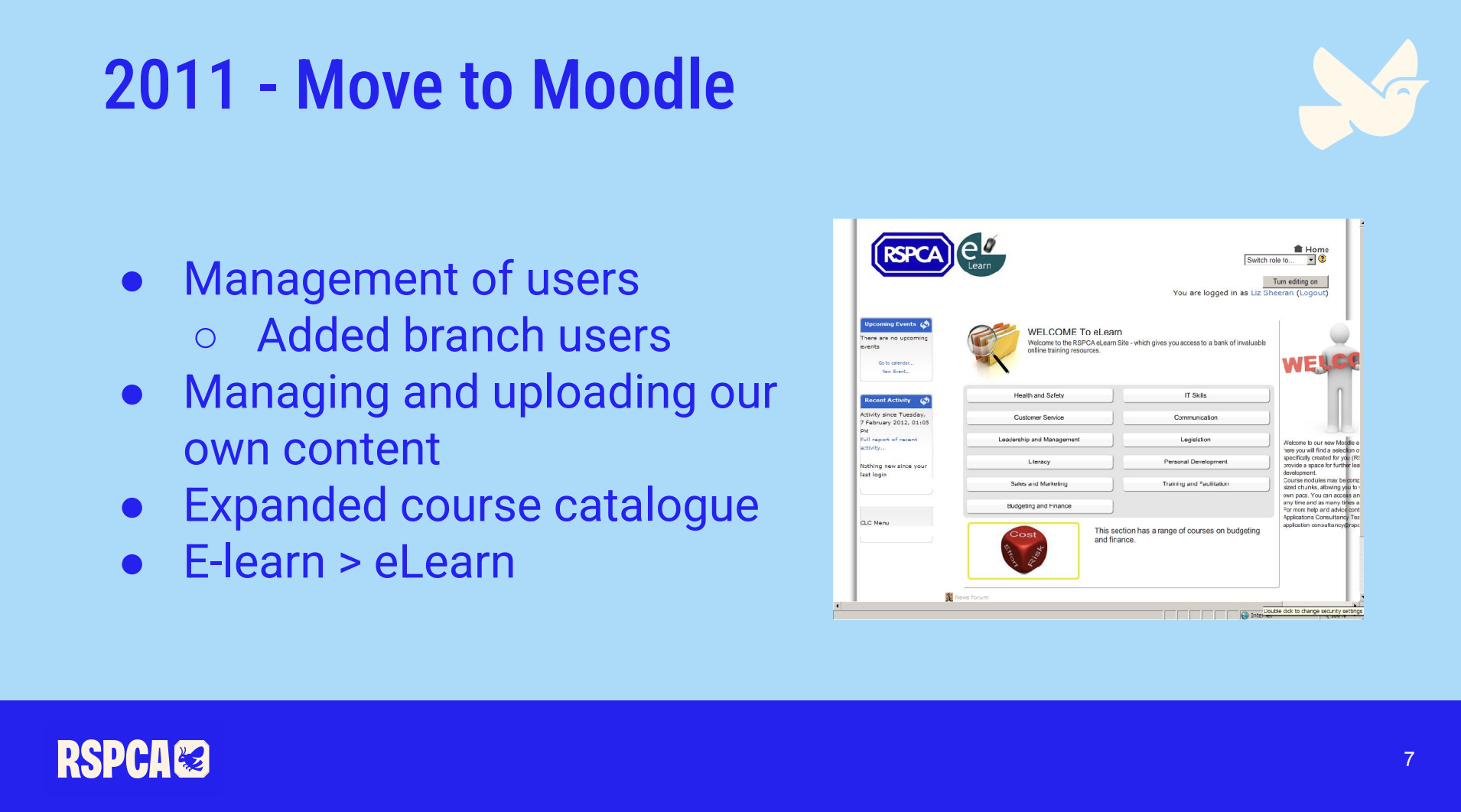
In 2011, the organisation migrated to Moodle, a turning point in the RSPCA’s digital learning strategy.
For the first time, the organisation could:
- Manage users internally
- Upload and manage its own content
- Expand learning beyond IT training
The platform was gradually opened up to all staff and branches, supporting wider personal development opportunities across the organisation.
This shift marked the true beginning of the RSPCA’s wider digital learning culture.
The Technology Transformation
Between 2011 and 2016, organisational technology changes dramatically improved access to learning.
Moving to Google Workspace
In 2012, the RSPCA migrated to Google Workspace, providing staff with:
- Email accounts
- Calendars
- Shared documents
- Cloud-based collaboration tools
This was a major cultural shift for the organisation and significantly improved communication across frontline teams.
Issuing Devices to Frontline Staff
A year later, the organisation rolled out:
- Chromebooks
- Smartphones
- Shared devices for centres and hospitals
For many staff, this was the first time they had direct, personal access to:
- Learning systems
- Digital resources
The LMS was made even easier to access through:
- Mobile shortcuts
- Enterprise browser bookmarks
By 2014, digital learning adoption had grown substantially:
- 2,500 users
- 220+ courses
- 5,000+ course completions
Rebuilding the Learning Experience
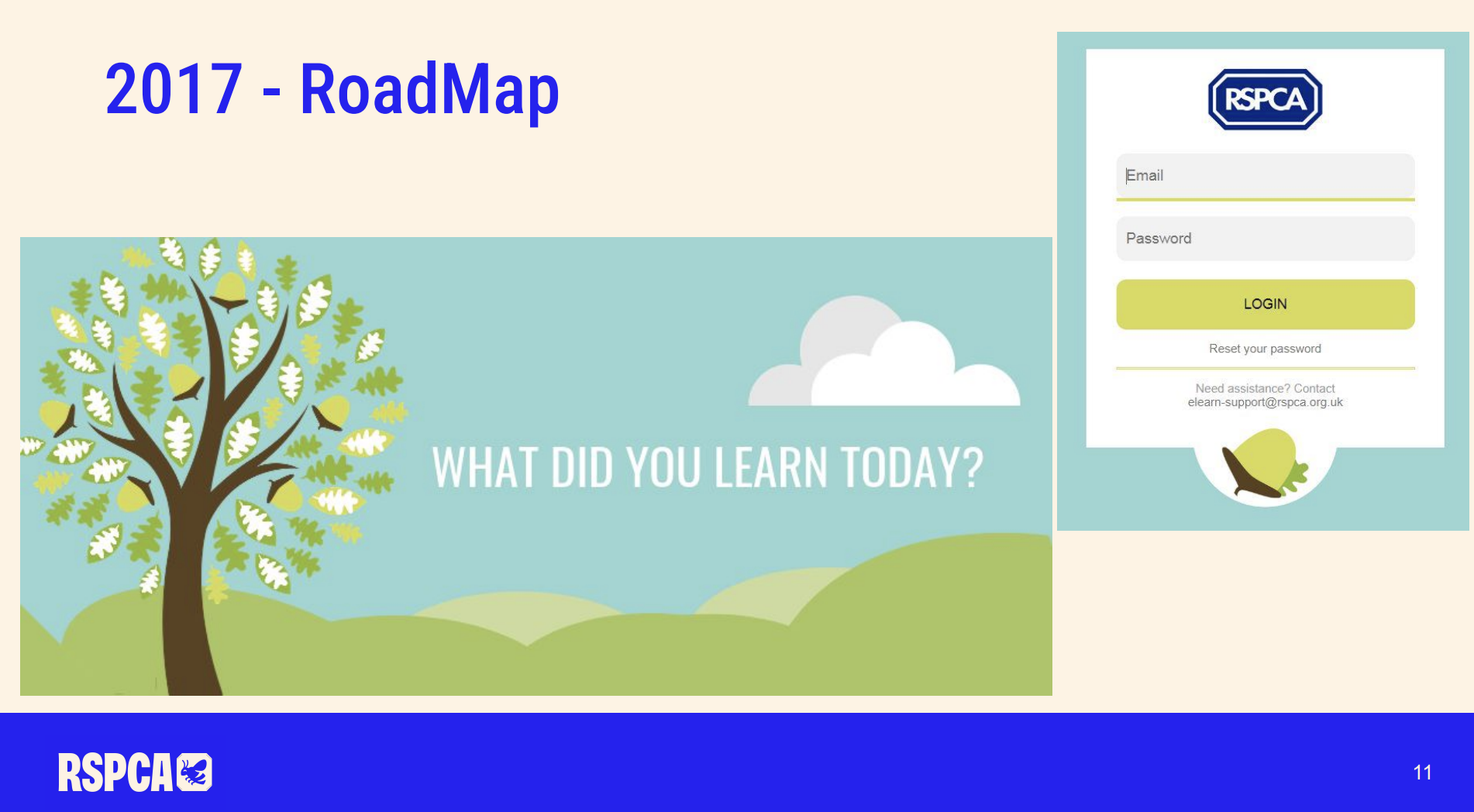
In 2017, the RSPCA moved to the Roadmap platform.
Rather than simply migrating existing content, the organisation used the opportunity to:
- Clean up historical user data
- Remove outdated courses
- Rebuild the learning structure
- Refresh the LMS branding
At the same time, several important improvements were introduced:
- Automated overnight HR user syncs
- Face-to-face activity management
- Volunteer integrations
- Single sign-on functionality
The implementation of automated user syncing significantly reduced administrative overheads. Face-to-face session management also streamlined operations for the Learning & Development team, saving considerable administrative time.
COVID-19 and Accelerated Digital Learning
The COVID-19 pandemic became a major catalyst for change.
While the transition was challenging, the organisation’s previous investments in cloud-based systems allowed learning delivery to continue with relatively little disruption.
Because the RSPCA already had:
- Google Workspace
- Cloud-hosted LMS infrastructure
- Familiarity with Google Meet
…the organisation was able to adapt quickly to remote and virtual learning. During this period, the LMS was rebranded as My Learning Hive, and digital learning expanded rapidly.
Growth During the Pandemic
Between 2019 and 2021:
- Face-to-face activity bookings increased from 300 to over 6,000
- Online inductions were introduced
- Mandatory training programmes launched
- Leadership pathways were developed
- Virtual induction sessions hosted by the CEO became highly popular
The pandemic accelerated years of digital transformation in a matter of months.
Where the RSPCA Is Today
Today, My Learning Hive is firmly embedded within the organisation’s wider digital ecosystem.
Current platform statistics include:
- Approximately 27,000 accounts
- Around 8,000 active users
- More than 20,000 course completions annually
- Nearly 400 internally created learning resources
The system now supports:
- Employees
- Volunteers
- Managers
- Leadership programmes
- Compliance training
- Self-directed learning
Departments across the organisation are also increasingly creating their own learning content, helping to decentralise learning ownership.
Find out more from the Charity Learning Consortium
Exceptional support

Streamline learning with our Learning Management System

Charity case studies
Our charity case studies spotlight the inspiring work of our members showcasing creative solutions, challenges overcome, and the real-world impact of learning and development in the third sector. Dive in to discover ideas, inspiration, and the power of shared success.

CL Consortium Ltd
Vine House, Selsley Road,
Stroud, GL5 5NN
The Charity Mentoring Network: A community platform that connects organisations, staff and volunteers together.