
Learning and development reports for the third sector

Ten reasons why charities should use eLearning
The value that eLearning delivers to third-sector organisations is huge. See the great things that can happen when charities incorporate eLearning into their training mix.
Whether your goal is to deliver consistent content to all learners, provide evidence of compliance training completion, or to save time and money within your L&D function to best make use of your donated funds: eLearning gets the job done.
We’ve put together the top ten reasons why charities should join the eLearning revolution. And we should know: the Charity Learning Consortium has been sharing top-level resources to the third sector since 2001!
Download our report to discover how charity L&D teams benefit from eLearning, with real examples from the likes of Shelter and St John Cymru.
Ten reasons why charities should use eLearning
The value that eLearning delivers to third-sector organisations is huge. See the great things that can happen when charities incorporate eLearning into their training mix.
Whether your goal is to deliver consistent content to all learners, provide evidence of compliance training completion, or to save time and money within your L&D function to best make use of your donated funds: eLearning gets the job done.
We’ve put together the top 10 reasons why charities should join the eLearning revolution. And we should know: the Charity Learning Consortium has been sharing top-level resources to the third sector since 2001!
Download our report to discover how charity L&D teams benefit from eLearning, with real examples from the likes of Shelter and St John Cymru.
Written by Andy Lancaster, Chief Learning Officer and Consultant at Reimagine People Development
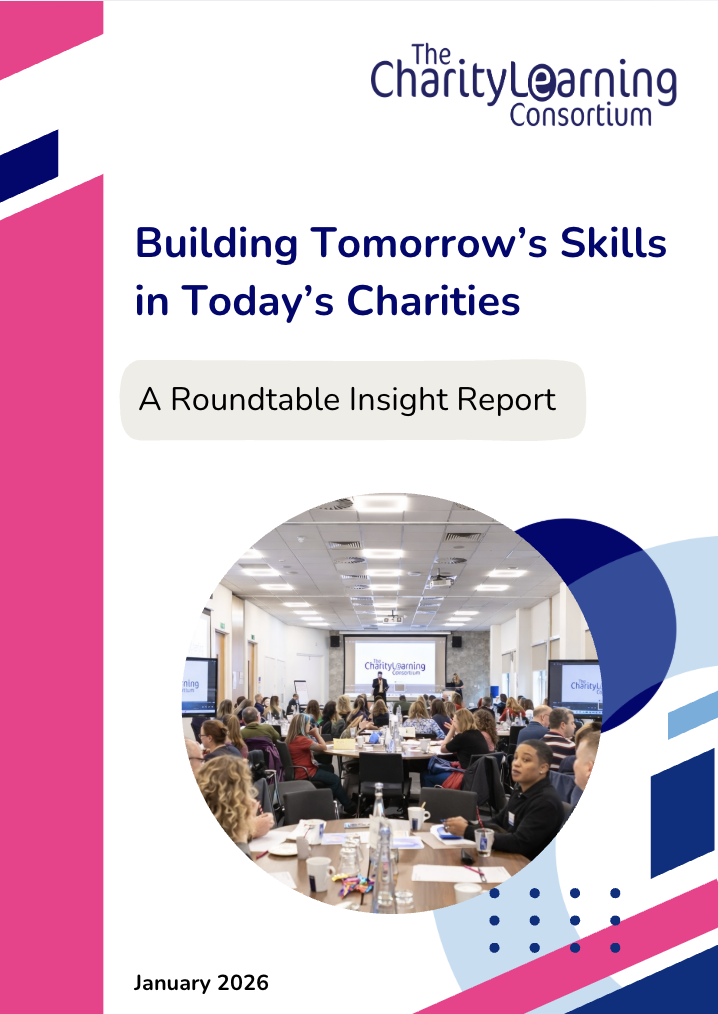
Building Tomorrow’s Skills in Today’s Charities
Drawing on insights from 102 UK charity learning and development practitioners to explore how the sector can build future-ready skills today.
This report highlights critical foundations to ensure charities are effective, adaptable and attractive employers. Each one is brought to life with clear insights into its relevance and importance, alongside practical, actionable tactics L&D teams can use to turn insight into real impact. Fill out the form below to download the full report.

How to create a learning programme for equity, diversity & inclusion
The report published by the Charity Learning Consortium, explains how to create an effective learning programme in equity, diversity and inclusion (EDI). Written by Nathan Nalla, the report is split into six key sections and includes:
- Three questions you need to address before creating a learning plan for EDI
- A partnership approach to EDI – with a focus on why, when and who you should partner with
- Embedding EDI into all learning
- Five things to bear in mind when designing EDI learning
- A spotlight on facilitation
- Ideas for evaluating outcome and impact
It’s packed with action points and useful hints and tips with case studies from Shelter, World Vision, Shaw Trust, RSPCA and Leeds University Union, showcasing the work of members of the Consortium.
How to create a learning programme for equity, diversity & inclusion
The report published by the Charity Learning Consortium, explains how to create an effective learning programme in equity, diversity and inclusion (EDI). Written by Nathan Nalla, the report is split into six key sections and includes:
- Three questions you need to address before creating a learning plan for EDI
- A partnership approach to EDI – with a focus on why, when and who you should partner with
- Embedding EDI into all learning
- Five things to bear in mind when designing EDI learning
- A spotlight on facilitation
- Ideas for evaluating outcome and impact
It’s packed with action points and useful hints and tips with case studies from Shelter, World Vision, Shaw Trust, RSPCA and Leeds University Union, showcasing the work of members of the Consortium.
More case studies from CLC members

CL Consortium Ltd
Vine House, Selsley Road,
Stroud, GL5 5NN